
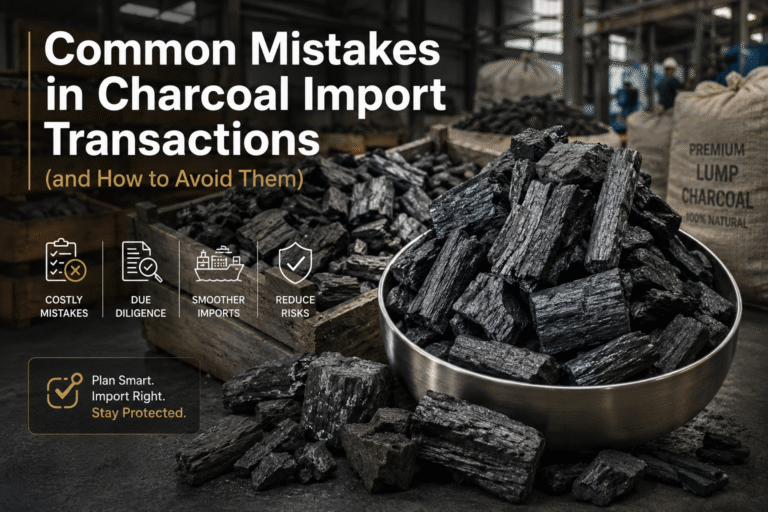
Importing charcoal may seem straightforward, but in reality, many buyers—especially new importers—face challenges that can lead to financial loss, shipment delays, and inconsistent product quality.
Understanding the most common mistakes in charcoal import transactions is essential to ensure a smooth, secure, and profitable business operation.
Lack of Supplier Verification
One of the most critical mistakes is choosing a supplier without proper verification.
Many buyers focus only on price and overlook important factors such as:
Company legal status and registration
Export experience and track record
Production capability and consistency
Without proper verification, buyers risk dealing with unreliable suppliers or inconsistent product quality.
Focusing Only on Price, Not Performance
Choosing the lowest price often leads to higher costs in the long run.
Low-cost charcoal may result in:
Faster burning and higher consumption
Unstable heat performance
High ash content
Professional buyers now prioritize performance, consistency, and efficiency, not just price per kilogram.
Ignoring Product Specifications and Testing
Another common mistake is not reviewing technical specifications.
Buyers should always check:
Ash content
Moisture level
Fixed carbon
Burning duration
Without clear specifications or testing data, it is difficult to guarantee product performance.
Misunderstanding Shipping Terms (FOB, CIF, EXW)
Many import issues arise from misunderstanding shipping terms in international trade.
For example:
Under EXW, the buyer handles almost everything
Under FOB, responsibility transfers at the port
Under CIF, shipping is included but risk still transfers at loading
Not understanding these terms can lead to unexpected costs and confusion during the shipment process.
Poor Communication with the Supplier
Lack of clear communication can cause delays and misunderstandings.
Buyers should ensure:
Clear agreement on specifications
Confirmed production timelines
Transparent updates on shipment status
Good communication is key to building a reliable long-term partnership.
Ignoring Documentation and Compliance
Incomplete or incorrect documentation is a major cause of delays in import transactions.
Important documents include:
Commercial Invoice
Packing List
Bill of Lading
Certificates (if required)
Failure to handle these properly can result in customs issues and additional costs.
Not Checking Packaging and Handling Standards
Packaging plays a crucial role in charcoal quality during transit.
Poor packaging can lead to:
Broken briquettes
Moisture absorption
Reduced product quality upon arrival
Buyers should ensure that suppliers use export-grade packaging suitable for long-distance shipping.
Choosing Unreliable Logistics or Freight Handling
Even with a good supplier, poor logistics can create problems.
Delays, damage, or unexpected costs often come from:
Inexperienced freight forwarders
Poor coordination between parties
Lack of tracking and updates
Working with experienced partners reduces these risks.
Conclusion
Avoiding common mistakes in charcoal import transactions is essential for ensuring smooth operations and long-term success.
By focusing on supplier verification, product quality, clear communication, and proper documentation, buyers can minimize risks and build a more reliable supply chain.