
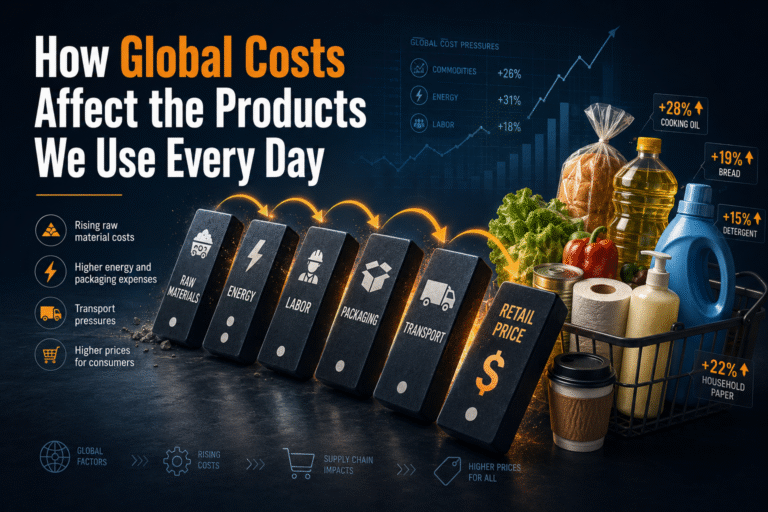
Many people think product prices are only determined by raw materials and production costs. In reality, the price of a product is also affected by many global factors, including shipping costs, fuel prices, exchange rates, supply chain disruptions, and international trade conditions.
This means that a product sold in one country can be affected by events happening far away in another part of the world.
From food and electronics to packaging materials and fuel products, global costs can influence the final price paid by businesses and consumers. This is why understanding global cost factors is important, especially for companies involved in import, export, and international trade.
Shipping Cost Is a Major Part of Product Price
One of the biggest global cost factors is shipping. Products that are traded internationally often need to travel by truck, ship, and sometimes warehouse before reaching the final buyer.
When shipping costs increase, the total cost of a product also increases. Even if the product price from the supplier remains the same, the final landed cost can become higher because of freight, port charges, fuel surcharges, and other logistics expenses.
For importers and distributors, this can affect selling prices, profit margins, and inventory planning.
Fuel Prices Can Affect Many Industries
Fuel price changes do not only affect transportation companies. They can also affect factories, shipping lines, logistics providers, and businesses that depend on regular deliveries.
When fuel prices rise, shipping companies may increase freight rates or add fuel surcharges. This can make imported goods more expensive.
For everyday products, the effect may not be seen immediately. But over time, higher fuel and logistics costs can be reflected in consumer prices.
Supply Chain Delays Can Increase Costs
Global supply chains are connected. When one part of the chain is disrupted, the impact can spread to many industries.
Port congestion, route disruption, geopolitical tension, vessel delays, or limited container availability can make shipments slower and more expensive. For businesses, delays can create additional costs such as storage fees, demurrage, emergency sourcing, and missed sales opportunities.
This is why delays are not only a logistics problem. They can also become a cost problem.
Exchange Rates Also Matter
For international trade, exchange rates play an important role. Many global transactions use currencies such as US dollars. When exchange rates change, the cost of imported or exported products can also change.
For buyers, a weaker local currency can make imported products more expensive. For exporters, currency movement can affect pricing strategy and competitiveness.
This is why businesses often need to consider currency risk when planning international purchases.
Why Businesses Must Look Beyond Product Price
In global trade, the lowest product price is not always the lowest total cost. A cheap product can become expensive if shipping is delayed, documentation is incomplete, quality is inconsistent, or logistics costs increase.
That is why buyers need to calculate the full cost, not only the unit price.
For example, in charcoal export, buyers need to consider product price, freight cost, packaging, documentation, port charges, delivery timeline, and product quality. All of these factors affect the real value of the purchase.
Reliable Suppliers Help Reduce Risk
When global costs are unstable, supplier reliability becomes more important. A reliable supplier can help buyers by providing clear product specifications, stable quality, proper packaging, export documentation, and transparent communication.
This helps buyers plan better and reduce unnecessary costs.
At Tunersia / PT Tuan Energi Indonesia, we understand that buyers need more than competitive product prices. They need reliable supply, clear communication, and professional export support.
Conclusion
Global costs affect many products we use every day. Shipping rates, fuel prices, supply chain delays, exchange rates, and trade conditions can all influence the final price of goods.
For businesses, understanding these factors is important to make better purchasing decisions. The real cost of a product is not only what is written on the quotation, but also what happens during production, shipping, documentation, and delivery.
In international trade, smart buyers look beyond price. They choose reliable suppliers who can help reduce risk, maintain product quality, and support smoother supply.
At Tunersia / PT Tuan Energi Indonesia, we are committed to supporting global buyers with quality charcoal products, reliable supply, and professional export service.