
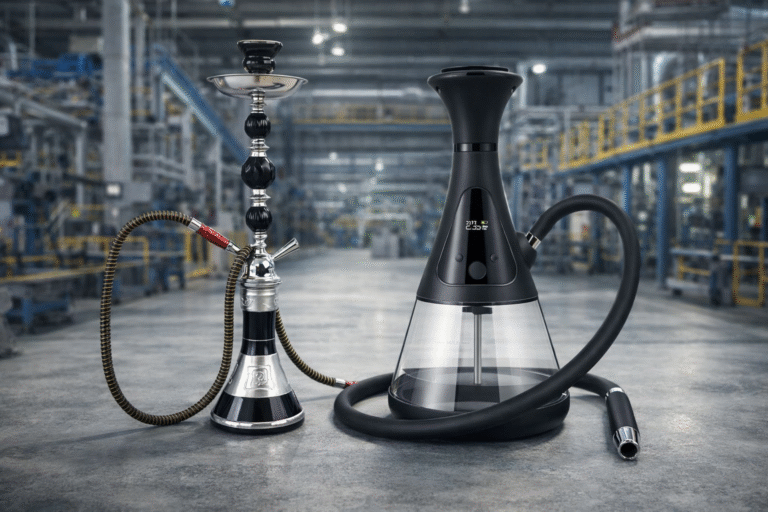
The shisha industry continues to evolve with the emergence of electric hookah (e-shisha) as a modern alternative. While both aim to deliver an enjoyable smoking experience, there are significant differences in performance, ease of use, and market segmentation. Understanding these differences is essential, especially for distributors, lounges, and shisha businesses.
Electric hookah (e-shisha) uses electronic heating systems and produces vapor instead of smoke. Its main advantage lies in convenience—no charcoal, minimal setup, and easy operation. This makes it a practical option for personal use or markets that prioritize portability and simplicity.
In contrast, traditional shisha uses natural charcoal—primarily made from coconut shells—which provides higher and more stable heat. This results in better flavor extraction, thicker smoke, and longer session duration, often exceeding 2 hours with high-quality charcoal. This is why charcoal remains the industry standard in the global shisha market.
From an experience standpoint, charcoal delivers a more authentic and consistent session, although it requires proper heat management. Meanwhile, e-shisha offers ease of use but comes with limitations in flavor intensity and overall performance.
In terms of market positioning, e-shisha is largely targeted toward individual consumers as a lifestyle product. On the other hand, charcoal-based shisha continues to dominate the B2B sector, including lounges, distributors, and hospitality businesses that prioritize consistency and performance.
In conclusion, electric hookah and traditional charcoal do not replace each other—they serve different needs. For professional use and premium markets, traditional shisha charcoal remains the preferred choice due to its reliability and superior performance.